


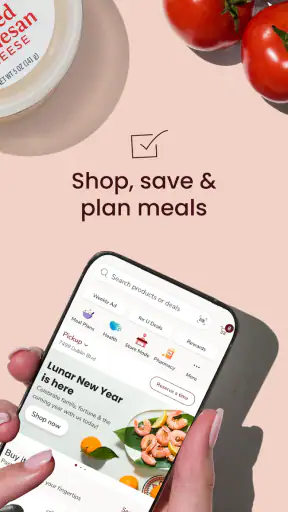
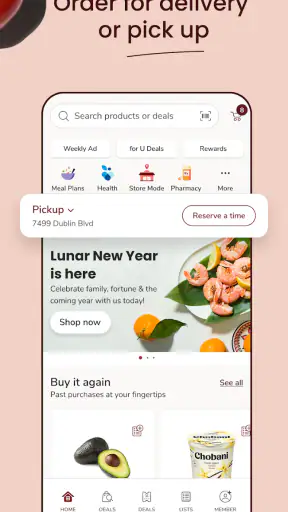
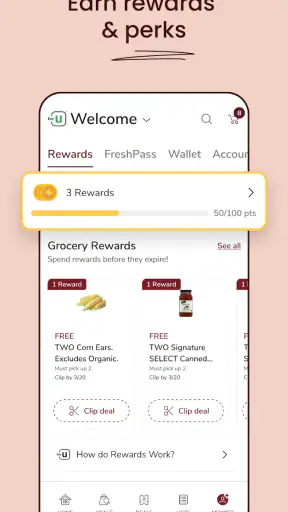
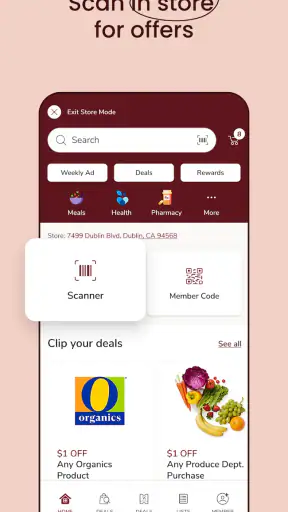
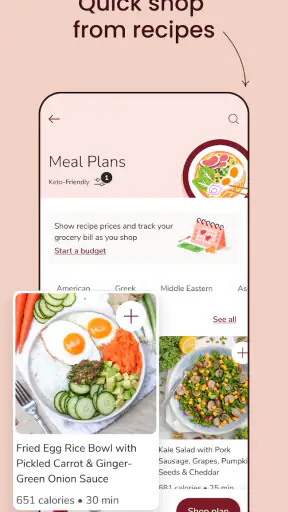
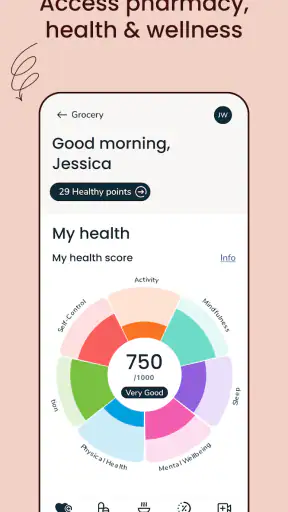
When I shop at ACME Markets, I usually want to solve several small tasks in one visit: check current deals, organize a grocery list, arrange pickup, and remember whether I need to refill a prescription. ACME Markets Deals & Delivery brings those jobs into one shopping app from Albertsons Companies, Inc., rather than making me switch between a circular, a coupon wallet, a pharmacy page, and a separate delivery service. I found its strongest appeal in that combination. It is less about flashy design and more about reducing the number of steps between deciding what I need and getting it home.
This is a free shopping app for Everyone, with support for devices running Android 8.0 or later. Its current version is 2026.27.0, and the app has passed the one-million-install mark. A 4.8 average from around 44 thousand ratings suggests that many shoppers find the overall experience worthwhile, while roughly 3.1 thousand written reviews give it a substantial user response behind that score. Those figures do not replace personal testing, but they do match my impression that the app is aimed at regular ACME customers rather than occasional browsers.
How ACME Markets feels during everyday shopping
Speed expectations before you start a basket
The app feels most useful when I open it with a clear purpose. If I am checking a deal, looking for fuel information, or preparing a grocery order, the focused nature of the tools keeps the experience fairly direct. I would not describe it as a general marketplace with endless unrelated products. Its value comes from connecting shopping tasks to ACME Markets, so the app makes more sense once I have selected the relevant store and know whether I am shopping for delivery, pickup, or an in-person trip.
That store-centered approach also affects perceived speed. A short list of planned items is easier to handle than a large, improvised order assembled while I am distracted. I recommend opening the app before leaving home, choosing the store you normally use, and clipping relevant offers before building the rest of the basket. This sequence avoids the common frustration of reaching checkout and then realizing that a useful deal still needs to be activated or that the order is associated with the wrong location.
The fuel section is another example of a task that benefits from preparation. I can check fuel-related information without treating the app as a full shopping session. That makes it handy when I am already planning a grocery run and want to decide whether stopping at ACME is convenient. It is a small feature in the overall experience, but it gives the app a practical role even on days when I am not ordering groceries.
What happens when the basket becomes demanding
Small orders are naturally easier to manage than a large weekly shop. With a bigger basket, the important question is not just whether screens open quickly; it is whether I can keep track of substitutions, quantities, offers, and the chosen fulfillment method without losing confidence in the order. This is where I think the app rewards a deliberate workflow. I add the essentials first, review the basket, then return to deals rather than trying to do everything in a single rushed pass.
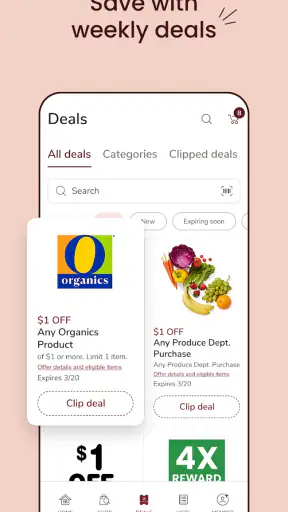
Coupon clipping can become the most mentally demanding part of a heavy-use session. A long list of promotions is not automatically useful, because a discount only helps if it applies to something I would actually buy. I get better results by treating deals as a second-stage filter: make the grocery list based on meals and household needs, then look for matching offers. That prevents the app from encouraging unnecessary purchases simply because an item appears attractive after a coupon.
For delivery or pickup, I would also reserve a final review moment. A large order has more opportunities for an incorrect size, duplicate item, or missed staple. The app is convenient because it combines ordering with deals, but that convenience can make me move quickly and overlook details. A careful basket check is still worthwhile, especially when the order supports several people or covers an entire week.
A realistic grocery routine
Imagine I am leaving work and need groceries for dinner, breakfast, and a few household basics. I open the app on the way home, review applicable deals, and build a short order instead of wandering through the store. If I am short on time, I choose pickup or delivery according to what is available for my shopping plan. Before submitting, I check the quantities and make sure the savings are attached to the items I intended to buy. If I also need medication, I can use the prescription refill area rather than remembering to handle it separately later.
That workflow is more valuable than any single feature. The app helps me turn a collection of errands into a checklist. It is especially useful for people who repeat similar shopping patterns, such as buying the same breakfast foods every week or combining groceries with prescription refills. The benefit is less dramatic for someone who visits different supermarkets constantly, since the experience is closely tied to ACME Markets rather than designed as a universal shopping assistant.
Stability and recovery when plans change
Shopping apps are judged harshly when an order is interrupted, because losing a carefully prepared basket wastes more time than a delayed product page. In my experience, I approach ACME Markets Deals & Delivery with the same caution I use for any checkout process: I avoid relying on a weak connection, keep the app open while finishing an important order, and review the basket after returning from a distraction. These habits are not glamorous, but they make recovery easier if I have to pause.
The app’s broad set of tasks means that a problem in one area does not necessarily make the whole app useless. If I am only checking deals, I can postpone the order itself. If the grocery basket needs more attention, I can finish that later rather than forcing a rushed purchase. This separation is a practical strength. It gives me several smaller entry points instead of making every visit an all-or-nothing shopping session.
I still think users should treat the final order review as essential. Delivery and pickup are convenient, but they create distance between the shopper and the shelf. In a physical store, I can immediately notice a different package or choose a replacement. With an app-based order, I need to be more intentional about reading the basket and checking that the selected fulfillment method matches my schedule. The app simplifies the process, but it does not remove the need for judgment.
Device limits and resource expectations
Because the minimum operating-system requirement is Android 8.0, the app remains accessible to people using older Android phones that are not limited to the newest software generation. That is useful for a household device kept mainly for shopping. At the same time, an older phone may feel less comfortable when the basket becomes large or when several app sections are opened in succession. I would keep the system updated as far as the device allows and close unrelated apps before preparing a major order.
I would not install this app on a device with very little free storage or an unreliable connection and expect a perfectly smooth experience. Shopping sessions involve account activity, product browsing, and order review, so interruptions are more troublesome than they would be in a simple static coupon viewer. On a modern phone, the app feels like a reasonable everyday utility. On an aging device, the best approach is to use it for focused tasks and avoid building a complicated order while multitasking.
Battery demand is unlikely to be my main concern during a short deal check, but a longer session involving a full grocery order naturally keeps the screen active and requires more interaction. I would prepare the basket at home rather than trying to assemble it while walking through a parking lot or managing children. That is both safer and more efficient, and it gives the app a fairer chance to feel stable.
Deals, coupons, and the real value of preparation
The coupon feature is most effective when I use it as part of a shopping plan. I do not see much value in clipping everything indiscriminately. A better method is to start with a list, search for deals connected to that list, and then make a second pass for household items I buy regularly. This creates a useful balance between saving money and avoiding impulse purchases.
There is also a timing trade-off. Checking offers immediately before shopping can be efficient, but it may leave me rushing through the basket. Checking earlier gives me more time to compare the deal with my normal purchase, decide whether the quantity makes sense, and choose delivery or pickup without pressure. For recurring shoppers, that small change in routine can make the app feel considerably more organized.
I would not use the app as my only source of grocery planning if I need detailed meal management, pantry tracking, or broad price comparison across many retailers. Its strength is connecting ACME-specific savings with ACME shopping. A dedicated list manager may be better for recipes and household inventory, while a general comparison tool may be better for checking several chains. The app works best as the transaction and savings layer, not as an all-purpose food-planning system.
Prescription refills and combined errands
The prescription refill option gives the app a useful advantage over a basic supermarket coupon application. I like the idea of handling a refill while organizing a grocery pickup, because it reduces the chance that a separate pharmacy task gets forgotten. This is especially helpful for routine errands where I already know what needs to be purchased and which prescription requires attention.
However, I would not assume that every pharmacy situation belongs inside a grocery order. A new prescription, an urgent medication question, or a complicated change is better handled directly with the pharmacy. The app is most convenient for straightforward refill planning, while unusual medical needs deserve a more direct conversation with pharmacy staff. That distinction keeps the convenience feature in perspective and avoids expecting a shopping app to replace professional support.
How it compares with ordinary alternatives
The traditional alternative is a store visit with paper coupons, a handwritten list, and a separate pharmacy stop. That method still has advantages: I can inspect products personally, make spontaneous substitutions, and ask an employee for help immediately. ACME Markets Deals & Delivery wins when I value preparation, repeat purchases, fuel information, or the ability to arrange pickup or delivery from one place.
A general delivery marketplace may offer access to several retailers, which is better for comparing stores or shopping outside the ACME network. The trade-off is that a retailer-specific app can connect deals and store services more directly. If ACME is already my regular supermarket, that specialization feels useful. If I simply want the lowest possible price across multiple chains, I would choose a broader comparison approach instead.
A separate coupon app may expose promotions from many businesses, but it can also make redemption more fragmented. Here, the shopping context is clearer: I am looking at ACME-related savings while preparing an ACME order or visit. That focus is a genuine advantage, although it means the app has less value when I am not shopping at ACME.
Who should use it, and who should skip it
I recommend it to regular ACME customers who want one place for grocery planning, clipped offers, fuel-related information, prescription refills, and delivery or pickup. It is particularly suitable for busy households, commuters combining several errands, and shoppers who repeat the same weekly purchases. The free price also makes it easy to try without committing to a subscription.
I would be more cautious if you shop mainly at independent stores, change supermarkets frequently, or prefer choosing every item in person. The app cannot make a retailer-specific ecosystem useful when that retailer is not part of your normal routine. It is also not the best fit for someone who wants advanced meal planning, detailed pantry management, or a universal comparison of every nearby grocery chain.
Accessibility is another practical consideration. The Everyone age rating makes the app appropriate for a broad audience, but comfort still depends on the phone, connection, and the complexity of the order. A person using an older device can benefit from the Android 8.0 support, while someone with a very large weekly basket should allow time for a careful review instead of expecting a one-minute transaction.
My performance verdict after using the full workflow
ACME Markets Deals & Delivery feels fastest when I use it as a prepared shopping tool rather than an endless browsing catalog. Its performance value comes from combining related errands: coupons can influence the grocery list, pickup or delivery can replace a store visit, fuel information can support the trip, and prescription refills can be remembered alongside household needs. That combination makes it more useful than a simple digital circular for the right customer.
The main friction is the same feature that makes it valuable: there is a lot to coordinate. Large baskets, coupon decisions, fulfillment choices, and pharmacy tasks deserve separate checks. Users with older phones or inconsistent connections should keep sessions focused and leave extra time for recovery. I would not call those reasons to avoid the app, but they are reasons to develop a sensible routine instead of tapping through checkout in a hurry.
Overall, I see this as a strong retailer-specific shopping companion, not a universal grocery solution. The high user rating and large install base fit an app that solves common ACME errands in a practical way, while the free access lowers the barrier to testing it. My recommendation is simple: if ACME is already your supermarket, use the app to prepare before you shop, clip only useful deals, and review large orders carefully. If you need cross-store comparison or prefer a fully in-person experience, the usual alternatives may serve you better.


